Lesson 4 — Understanding Aperture.
Lesson 4: Understanding Aperture — f-Stops, Depth of Field, and Bokeh
In Lesson 3, we introduced the exposure triangle and touched on how aperture affects both exposure and depth of field. Now it’s time to go deeper. Aperture in photography is arguably the most creatively powerful setting on your camera — it doesn’t just control how much light reaches the sensor, it shapes how your entire photo looks, from a razor-thin sliver of focus on a portrait to a landscape that’s sharp from the foreground rocks to the mountains behind it. This lesson covers how aperture works, what f-stops actually mean, and how to use aperture deliberately for depth of field and bokeh.
What Aperture in Photography Actually Is
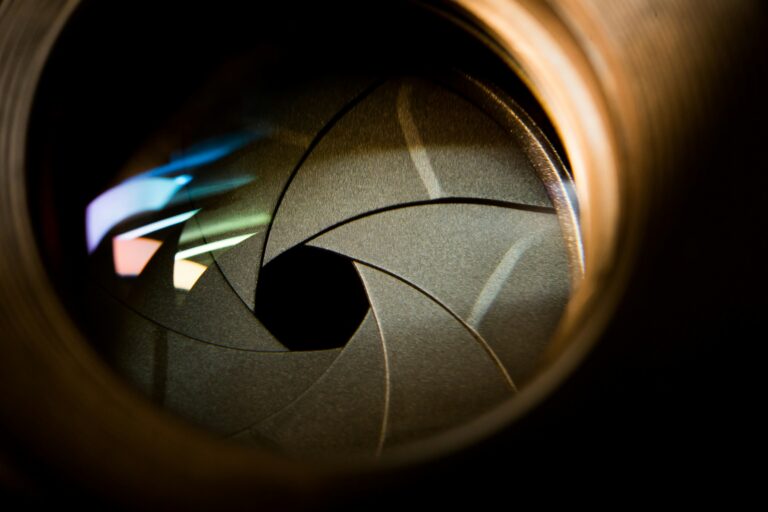
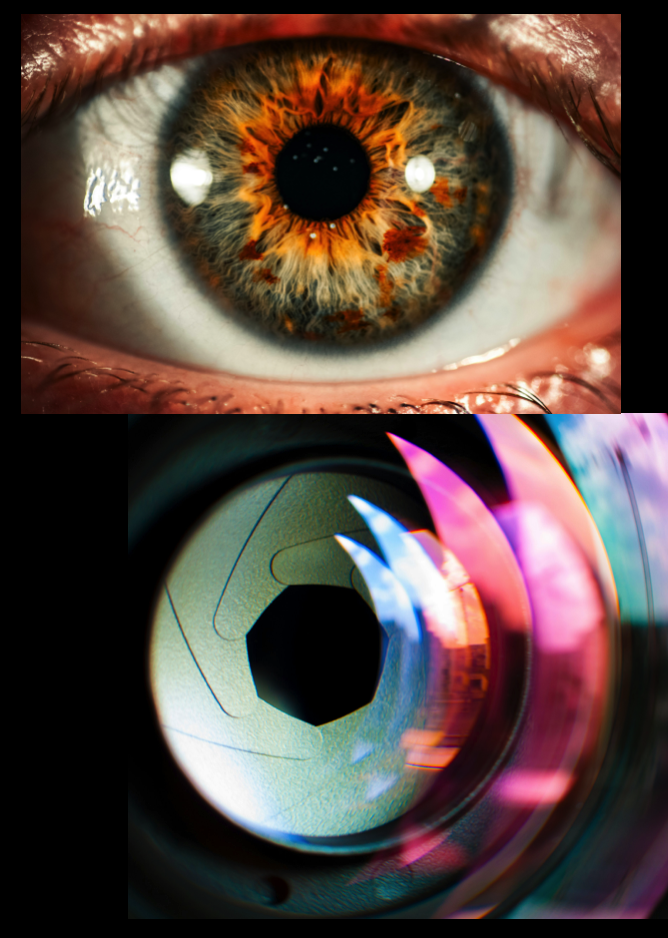
Aperture is the adjustable opening inside a lens, formed by a ring of overlapping blades called the diaphragm, that controls how much light passes through to the sensor. Widen the opening and more light gets in; narrow it and less light gets in — the same mechanism at work in the human eye. The iris, the coloured ring around your pupil, does exactly this job: in bright sunlight, it narrows the pupil to let in less light, and in darkness, it widens the pupil to let in more. A camera’s aperture blades do the same thing the iris does — they just sit inside a lens instead of inside an eye.
How F-Stops Work (and Why Smaller Numbers Mean Bigger Openings)
Aperture is measured in f-stops, written as numbers like f/1.8, f/4, f/8, and f/16. This is the part beginners find counterintuitive: a lower f-stop number means a larger opening, letting in more light, while a higher f-stop number means a smaller opening, letting in less light. Nikon’s own guidance on this puts it clearly — lower f-stops give more exposure because they represent larger apertures, while higher f-stops give less exposure because they represent smaller ones. Every lens has a maximum aperture (its widest opening) printed on the barrel — a lens marked f/1.8 opens wider, and lets in more light, than one marked f/4.
Aperture and Depth of Field
Depth of field is the zone of a photo, front to back, that appears acceptably sharp. Aperture is the main tool you have for controlling it:
- Wide aperture (low f-stop, like f/1.8 or f/2.8): shallow depth of field — a thin slice of the image is sharp, and everything in front of or behind it blurs away. This is the classic portrait look, where the subject’s face is crisp and the background melts into softness.
- Narrow aperture (high f-stop, like f/11 or f/16): deep depth of field — most or all of the scene, near to far, stays in focus. This is what landscape photographers reach for when they want everything from the foreground flowers to the distant hills sharp.
ePHOTOzine’s guide to maximum aperture is a good next read if you want to see this principle illustrated with real side-by-side comparisons.
What Bokeh Is, and Why Aperture Creates It
Bokeh is the quality of the out-of-focus blur in a photo — specifically, how pleasing or “creamy” the background looks when it falls outside the depth of field. The word comes from the Japanese boke, meaning blur or haze. Nikon describes it simply: bokeh is the soft, out-of-focus background you get when shooting a subject with a fast lens at a wide aperture, typically f/2.8 or wider. The wider the aperture, the shallower the depth of field, and the more pronounced the bokeh behind your subject.
Not every lens renders bokeh the same way, even at an identical aperture and focal length — the design of the aperture blades and the lens’s optical construction both play a role. Photography Life’s explanation of bokeh notes that bokeh is rendered by the lens, not the camera body, which is why two different lenses shooting the same scene at the same settings can produce noticeably different-looking background blur.
Aperture’s Trade-Off: Light and Shutter Speed
Because aperture is one corner of the exposure triangle from Lesson 3, opening it up doesn’t just change depth of field — it also lets in more light, which means your camera can use a faster shutter speed for the same exposure. This is part of why fast lenses (those with a wide maximum aperture like f/1.8) are so useful in low light: they let you keep your shutter speed fast enough to avoid blur, without pushing your ISO sky-high.
Why Understanding Aperture Matters
Once aperture stops being an abstract number and starts being a tool you reach for on purpose, your photography changes. Want to isolate a subject from a busy background? Open up to f/2. Want a group photo where every face, front row to back, is in focus? Close down to f/8 or narrower. This is also the setting most beginners start controlling manually first, through Aperture Priority mode — which we’ll cover next, alongside the other camera modes.
What You Now Know About Aperture
Aperture is the adjustable opening in your lens, measured in f-stops, where a lower number means a wider opening and more light — working exactly like the iris and pupil of a human eye. It’s the primary control over depth of field — wide apertures blur the background, narrow apertures keep more of the scene sharp — and it’s also the setting responsible for bokeh, the pleasing quality of out-of-focus blur. Because aperture is one side of the exposure triangle, every adjustment you make to it has a ripple effect on shutter speed and ISO too.
Next: Lesson 5 — Understanding Shutter Speed: Freezing and Blurring Motion
➤ Browse Used Nikon Cameras — Good Used Cameras
Sources
Nikon USA — What Is Aperture: The Key to Sharper, More Creative Photography
Nikon USA — Bokeh for Beginners
ePHOTOzine — Understanding Maximum Aperture on Your NIKKOR Lens
Photography Life — Understanding Bokeh for Beginners
✅ Fact-checked against Nikon USA, ePHOTOzine, and Photography Life. All technical claims — f-stop/aperture-size relationship, depth-of-field effects, bokeh mechanics, and the eye/iris/pupil analogy — confirmed accurate as of July 2026.