Building Your First Lens Kit: How to Start Smart, Buy with Purpose, and Avoid the Gear Trap
How to Start Smart, Buy with Purpose, and Avoid the Gear Trap
There is a particular kind of photographer you encounter at camera clubs and online forums. They own seven lenses. They have spent, in aggregate, a substantial amount of money. They photograph their cat.
This is not a character flaw. It is the entirely predictable result of building your first lens kit
without a strategy — accumulating lenses that seemed appealing at the time, responding to sales and forum recommendations and the persistent human conviction that the next purchase will be the one that finally makes the images feel right. It is called gear acquisition syndrome, and it afflicts photographers at every level of experience and income. Fstoppers has documented just how common this pattern is among photographers at every stage.
The cure is not willpower. It is a framework for building your first lens kit — thinking about what you actually need, in what order, and why. This post provides that framework.
The Question That Changes Everything
Before you spend a dollar on any lens — before you read a single review, compare a single specification, or open a single product listing — answer this question as honestly and specifically as you can:
What do I want to photograph?
Not in a general sense. Not “I want to take nice photos” or “I like capturing memories.” Specifically. Portraits of people? Landscapes on weekend hikes? Your children at sports events? Birds in the garden? Food for a small business? Architecture? Street scenes while travelling? Weddings for paying clients?
The answer to this question is not a preference — it is a technical specification. Different subjects impose different optical requirements, and those requirements determine which lenses you need before any other consideration enters the picture. A photographer who knows they want to document their children’s sport has already answered most of their lens questions: they need reach, they need fast autofocus, they need enough aperture to work in variable outdoor light. That points to a specific category of lens before budget, brand, or any other factor is relevant.
Write down your answer. Be specific. Then read the rest of this post with that answer in front of you.
The Myth of the Complete Kit
New photographers are often sold the idea that a camera kit is something you assemble completely before you start shooting seriously. Three lenses, a bag, some filters, a tripod — and then you are ready. This is backwards, and it is expensive.
Professional photographers — people who earn their living from this craft — almost universally started with one or two lenses and then you start building your first lens kit slowly, in response to specific photographic problems they actually encountered. They did not buy a 180mm macro lens because macro photography seemed interesting. They bought it because they had a specific assignment or project that demanded macro capability, and they understood exactly what they needed it to do.
The practical lesson for you, building your first lens kit, is start with the minimum that allows you to pursue your primary photographic interest seriously, shoot with it until you understand what it cannot do, and then buy the next lens to address that specific limitation. Every purchase made in response to a real photographic need is a good purchase. Every purchase made in anticipation of a need you have not yet encountered is a gamble.
The Starter Kit: One Body, Two Lenses, Most Situations Covered
For the majority of photographers — those shooting people, travel, everyday life, and general documentary work — a two-lens starter kit covers an enormous range of situations at a fraction of the cost of a full professional setup. Here is the logic:
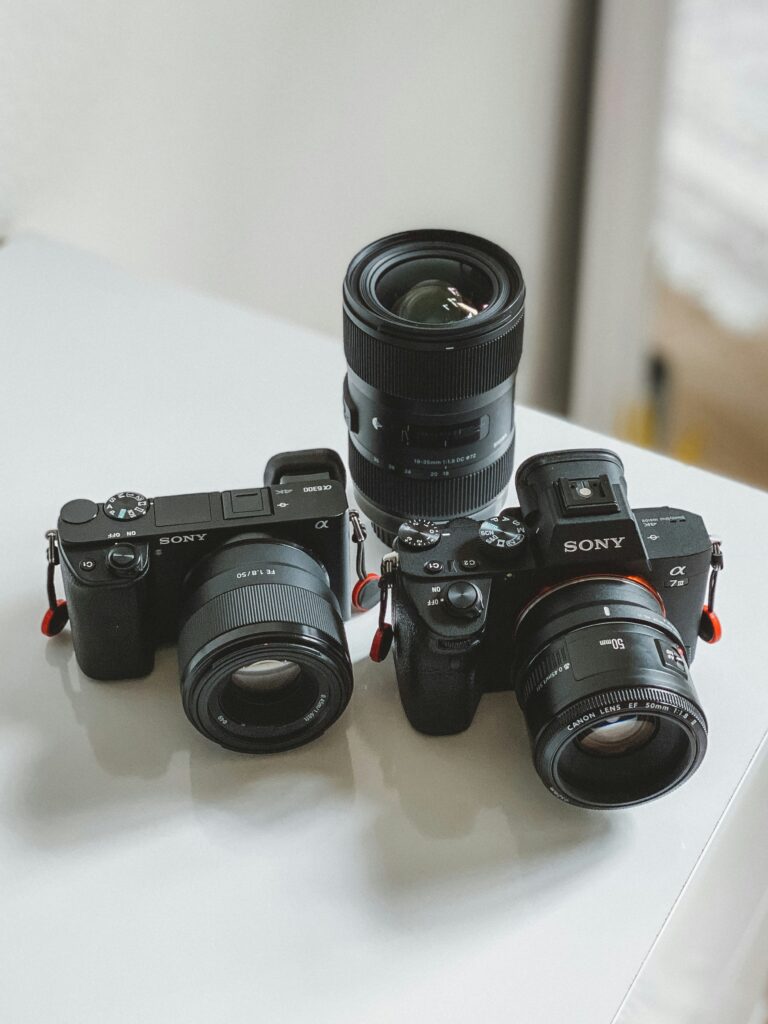
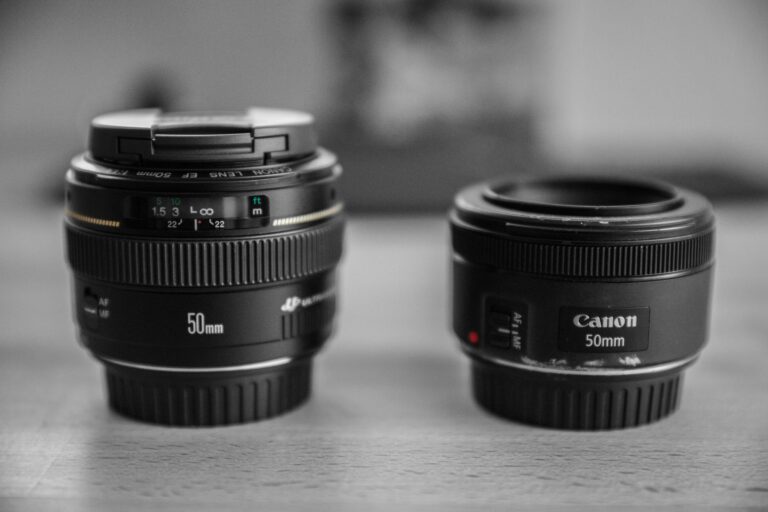
The first lens should be a fast standard prime. A 50mm f/1.8 on full-frame, or a 35mm f/1.8 on APS-C, gives you the most optical quality per dollar of any lens category. It forces you to think about composition because you cannot zoom. It performs beautifully in low light. It produces excellent background separation for portraits. It is compact and unobtrusive. And because it is the most commonly manufactured lens in the world, quality used examples are plentiful, well-priced, and easy to evaluate. This is the lens you learn on. Many accomplished photographers never feel the need to replace it.
The second lens should address the specific gap your primary subject creates. For portrait photographers, that is typically an 85mm prime — more reach, more flattering compression, more background separation at social distances. For travel and landscape photographers, it is a wide zoom in the 16-35mm or 10-20mm range. For anyone photographing subjects at distance — wildlife, sport, events — it is a telephoto zoom, most commonly a 70-300mm or the more capable 70-200mm f/4. The second lens is always chosen in response to what the first lens cannot do.
This two-lens philosophy is not a beginner’s compromise. It is how working photographers travel, how documentary photographers operate in the field, and how portrait photographers work in studio sessions. Two well-chosen lenses handle more situations than five poorly-chosen ones.
Matching Kit to Subject: Practical Starter Recommendations by Photography Type
To make this concrete, here is how the two-lens framework applies to common photography interests. These are starting points, not prescriptions, and quality used lenses in each category represent outstanding value relative to buying new.
Portrait and people photography: 50mm f/1.8 prime to start, 85mm f/1.8 prime as the second lens. Both focal lengths flatter faces, both are available with large apertures for background separation, both are among the most plentiful used lenses on the market.
Landscape and travel: Wide zoom (16-35mm or equivalent) as the primary lens for the scenes and scale that define landscape photography, with a 50mm or short standard zoom as the versatile complement for detail shots, street scenes, and documentary moments along the way.
Wildlife and nature: A telephoto zoom — 100-400mm or 150-600mm — is the primary tool and there is no substitute for reach in this genre. Pair it with a 50mm or standard zoom for environmental context shots. Budget accordingly: quality telephoto lenses represent the largest investment in photography outside of medium format.
Sport and action: A 70-200mm f/2.8 zoom is the professional standard for most sports at moderate distances. Fast autofocus is as important as focal length — lens and body need to work together. For sports at greater distances, a 300mm or 400mm prime or zoom is necessary.
Street photography: A single 28mm or 35mm prime is the traditional street photography kit. Compact, unobtrusive, fast to use, and wide enough to capture the context that gives street photography its meaning. Many accomplished street photographers work with one prime for years.
Food and product photography: A 100mm macro covers both close-up detail work and the wider shots that show food in context. A 50mm prime is the versatile complement. Both are used extensively in commercial food and product work.
Events and weddings: A 24-70mm f/2.8 zoom paired with an 85mm or 135mm prime covers almost everything. The zoom handles the unpredictable, fast-changing moments; the prime handles the formal portraits and detail shots where optical quality is most scrutinised.
The Used Lens Advantage in Kit Building
Building your first lens kit from quality used glass rather than new is not a compromise — for most photographers in most situations, it is the superior strategy. The optical quality of a well-maintained used lens is identical to the same lens new. Glass does not degrade with moderate use. Coatings do not wear from normal handling. The image a used 85mm f/1.8 produces is the same image a new one produces.
What this means practically is that your budget goes significantly further when buying used. The price difference between a new and used version of the same lens — typically thirty to fifty percent for common focal lengths, more for premium glass — can be reinvested in a second lens, or in a higher-quality lens than your budget would otherwise allow. A photographer who buys a used 70-200mm f/2.8 for the price of a new f/4 version has made a meaningful optical upgrade for the same money. Browse our current inventory to see what quality used glass looks like at every stage of a starter kit.
The keys to buying used lenses confidently are understanding condition ratings, knowing what to inspect, and purchasing from reputable sources that test and grade their stock honestly. We will cover that in detail later in this series. For now, the principle is simply that used glass belongs in every kit-building conversation, not as a fallback when new is unaffordable, but as the considered first choice for a photographer who wants to maximise optical quality within a budget.
What Not to Buy: The Gear Traps That Cost Money and Deliver Disappointment
A few common kit-building mistakes are worth naming explicitly, because they recur constantly and they are all avoidable.
Do not buy a superzoom as your primary lens. The 18-300mm or 28-300mm lenses that promise to cover everything in one barrel are seductive in theory. In practice, optical compromises accumulate across such a wide zoom range, maximum aperture is slow throughout, and image quality at the extremes is rarely satisfying. These lenses are convenience tools, useful for travel situations where changing lenses is impractical and optical quality is secondary to having something in the frame. They are poor choices as the foundation of a serious kit.
Do not buy more lenses than you can carry and use confidently. A bag with six lenses means six lenses competing for your attention in the moment when you should be watching the light and the subject. Most photographers who rationalise their kit down to two or three truly excellent lenses report that their photography improves. The constraint forces decisions, and decisions make photographs.
Do not buy lenses for the subjects you intend to photograph someday. Buy for what you are photographing now, with genuine commitment. Lenses purchased for future aspirations have a way of sitting unused while the subjects you actually care about go undocumented.
Do not mistake lens quantity for photographic capability. The ability to see a photograph — to recognise light, compose instinctively, anticipate a moment — is developed through shooting, not through owning. One lens used constantly will teach you more about photography than five lenses used occasionally.
The Kit-Building Sequence That Works
To summarise the practical framework this post has been building toward:
Step one: Define your primary photographic subject as specifically as possible.
Step two: Identify the optical requirements that subject imposes — focal length range, minimum aperture, autofocus demands.
Step three: Choose one lens that addresses those requirements as closely as possible within your budget, prioritising quality over coverage.
Step four: Shoot with that one lens until you understand what it cannot do. This may take weeks or months. That is correct.
Step five: Identify the specific gap — the subject or situation your current lens cannot serve well — and buy the second lens that addresses exactly that gap.
Step six: Repeat step four and five as your photography develops and your needs become clearer.
This is how every serious photographer builds a kit, whether they articulate it this way or not. The photographers who end up with coherent, capable, well-used kits followed something like this sequence. The photographers who end up with seven lenses and a cat followed a different one.
Choosing Used With Confidence
If you are ready to start building your first lens kit— to identify the one or two lenses that serve your photography and invest in quality glass rather than quantity — used lenses represent the most direct path to optical capability at a sensible price. The key is knowing what you are looking for, understanding condition grading, and buying from a source that has done the inspection work honestly.
The posts that follow in this series address exactly that: how to evaluate used lenses, what the condition ratings mean in practice, what to look for and what to avoid, and how to make a used lens purchase with the same confidence you would bring to buying new. By the time you have worked through this series, you will have both the optical knowledge to choose the right lenses and the purchasing knowledge to acquire them well.
— — —
Next: Used vs New Lenses — Why Secondhand Glass Deserves a First Look
2 Comments