
Lens Coatings and Glass Quality: What Separates a Bargain Lens from a Quality Used Find
Lens coating quality is only half the picture — the glass itself varies considerably too.
In the early days of commercial photography, lens flare was not an aesthetic choice. It was a problem. When light struck the uncoated glass surface of an early photographic lens, a significant percentage of that light bounced around inside the barrel rather than passing cleanly through to the film plane. The result was reduced contrast, washed-out shadows, and unpredictable bright artefacts in the image — effects that photographers worked hard to avoid by carefully controlling the angle of their light sources.
The solution, developed incrementally from the 1930s onward, was lens coating: the application of thin layers of material to glass surfaces to reduce the amount of light reflected at each air-to-glass interface. The optical improvement was immediate and significant. Coated lenses produced images with better contrast, richer shadow detail, and far greater resistance to the flare that had plagued earlier photography. Modern multi-coating technology has refined this further to the point where a well-coated lens can transmit more than ninety-nine percent of incident light through each glass surface.
This history matters to the used lens buyer because lens coating quality — and the quality of the glass itself — is one of the primary determinants of image quality, and it’s a factor that condition ratings alone do not always capture. Understanding what does lens coating do, and what questions to ask, separates a genuinely good used lens purchase from one that looks right on paper and disappoints in the field.
How Lens Coatings Work
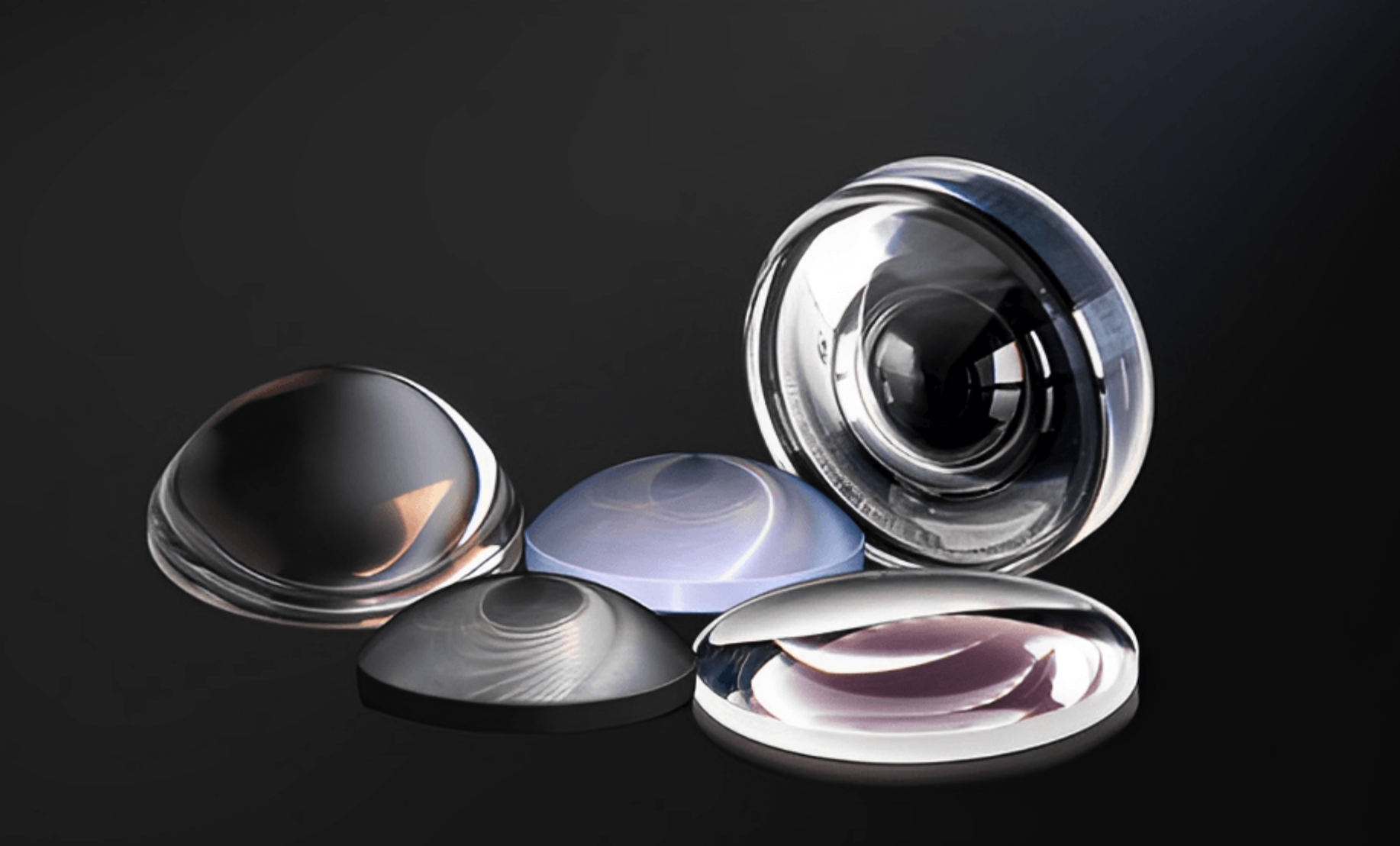
Every lens is made up of multiple glass elements — individual pieces of precisely shaped glass arranged in groups inside the barrel. A modern zoom lens may contain fifteen or more individual elements. Each element has two surfaces, and at each surface, some light is reflected rather than transmitted. In an uncoated lens, each air-to-glass interface reflects roughly four to five percent of the light passing through it. In a lens with fifteen elements and thirty surfaces, the cumulative light loss from reflections alone would be substantial, and the reflected light bouncing between internal surfaces would create significant flare and contrast reduction.
Lens coatings solve this by applying extremely thin layers of material — typically magnesium fluoride or more complex proprietary compounds — to glass surfaces. These coatings work through optical interference: the coating thickness is calculated so that light waves reflected from the top and bottom surfaces of the coating cancel each other out. The result is a dramatic reduction in surface reflection, from four to five percent on an uncoated surface to as little as 0.1 to 0.5 percent on a well-coated one.
Single coating, the earliest technology, applies one layer to each surface and reduces reflection across a limited wavelength range. Multi-coating applies multiple layers tuned to different wavelengths, providing more effective and more uniform reflection reduction across the visible spectrum. Modern high-performance coatings from premium manufacturers — Canon’s Super Spectra Coating, Nikon’s Nano Crystal Coat, Zeiss’s T* coating, Leica’s ASPH coating technology — represent decades of refinement and are among the most significant differentiators between budget and professional-grade lenses.
The practical consequence of superior coatings is visible in the photographs. In controlled studio conditions with carefully managed light, the difference between a well-coated and a poorly-coated lens may be subtle. In challenging real-world conditions — shooting toward the sun, working under mixed artificial lighting, photographing subjects with strong backlight — the difference in contrast, shadow detail, and flare resistance becomes significant and sometimes dramatic.
Glass Quality: Not All Optical Glass Is Equal
Beyond the lens coating quality, the glass itself varies considerably in quality, and this variation has direct consequences for image sharpness, colour accuracy, and the correction of optical aberrations.
Optical glass used in camera lenses must meet demanding specifications for clarity, homogeneity, and refractive index consistency. Variations in glass purity or manufacturing consistency create optical inhomogeneity — local variations in refractive index that scatter light and reduce sharpness. Premium lens manufacturers specify and test their glass to tighter tolerances than budget manufacturers, and the difference shows in the final image.
The refractive index and dispersion characteristics of the glass also determine how well the lens designer can correct chromatic aberration — the tendency of a lens to focus different wavelengths of light at slightly different points, which manifests as coloured fringing around high-contrast edges in photographs. Correcting chromatic aberration requires combining glass elements with different dispersion characteristics so their errors cancel each other out. The availability of low-dispersion and anomalous-dispersion glass types gives lens designers more tools for this correction, which is why lenses incorporating elements described as ED (Extra-low Dispersion), LD (Low Dispersion), or UD (Ultra-low Dispersion) generally show better control of chromatic aberration than equivalent lenses without these elements.
Fluorite elements — used in some premium telephoto lenses, notably Canon’s L-series and Nikon’s top telephoto range — offer exceptional low-dispersion characteristics and thermal stability. Lenses incorporating fluorite elements are expensive to manufacture and expensive to buy, but their chromatic aberration correction and colour rendering are outstanding. Used examples of fluorite-element lenses represent significant value because the optical quality is unchanged by age while the price reflects the used market rather than the new.
Aspherical Elements: What They Are and Why They Matter
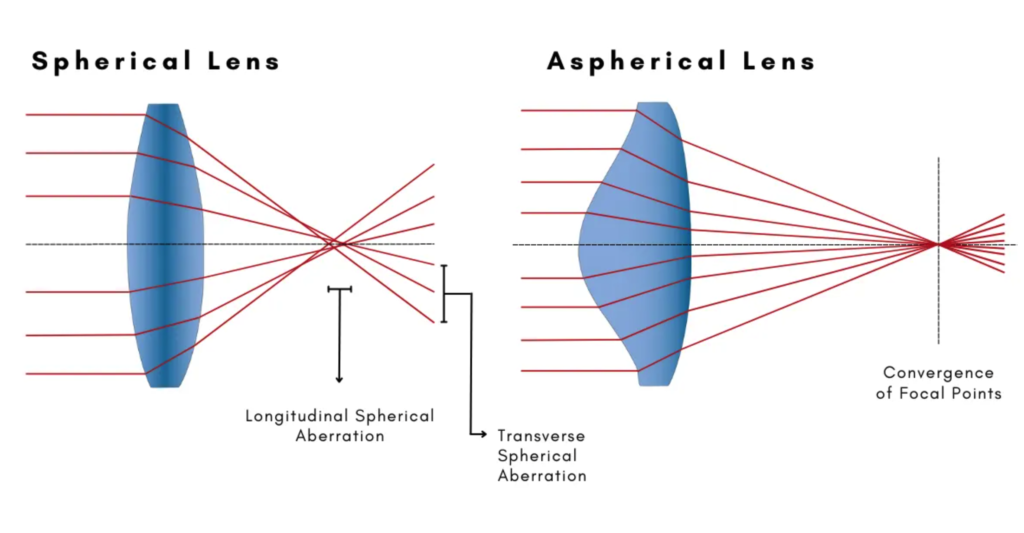
A standard spherical lens element has surfaces that follow a perfect sphere. Spherical surfaces are relatively straightforward to manufacture but introduce a specific optical aberration called spherical aberration — light rays passing through the outer zones of the lens focus at a slightly different point than rays passing through the centre. The result is a loss of sharpness and a softening of fine detail, particularly at wide apertures.
Aspherical elements have surfaces with a more complex profile that varies across the element radius. This more complex shape corrects spherical aberration more effectively than combining multiple spherical elements, and it allows lens designers to achieve better sharpness at wide apertures using fewer total elements — which means a lighter, more compact lens with less glass for light to pass through.
Aspherical elements are expensive to manufacture to the precision required for optical use, which is why their presence has historically been a marker of premium lens design. They appear most commonly in fast prime lenses and high-quality zoom lenses where spherical aberration control at wide apertures is critical. When a used lens listing mentions aspherical elements, it is a positive indicator of optical design quality — not a guarantee of a good lens, but a meaningful signal worth noting.
How to Assess Lens Coating Quality on a Used Lens
When evaluating a used lens, how to check lens coating damage is as important a skill as judging glass condition. Coatings can be damaged by improper cleaning, chemical exposure, or physical abrasion, and coating damage affects image quality in ways that may not be immediately obvious from a casual inspection.
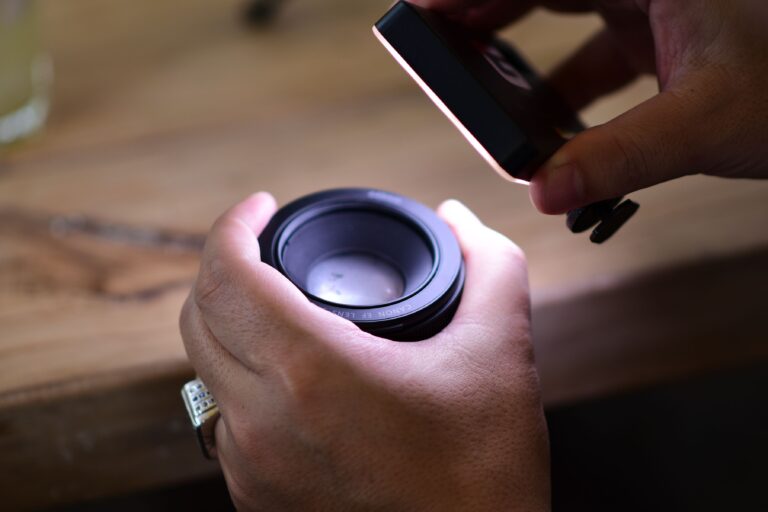
The classic way to check coating condition is to hold the lens at an angle to a light source — a window or a ceiling light works well — and look at the reflection in the front and rear elements. A healthy coating reflects a colour-shifted version of the light source: you will see purples, greens, blues, or ambers depending on the coating chemistry, rather than a clear or white reflection. This coloured reflection is the coating working as designed — the interference effect that reduces transmission loss also shifts the colour of the reflected light. A clear or white reflection from an element that should be coated suggests the coating may be absent, damaged, or worn.
Cleaning marks are the most common form of coating damage on used lenses. When a lens is cleaned with an abrasive cloth, or with excessive pressure, the lens coating quality is degraded by scratches at a microscopic level. Under normal examination the lens may look clean; under oblique light, a pattern of fine swirl marks or haze becomes visible. Minor cleaning marks in small areas of the front element often have negligible effect on image quality. Extensive cleaning marks covering most of the front element can cause veiling flare — a generalised reduction in contrast across the image — particularly when shooting in bright conditions.
The rear element of the lens is optically more critical than the front for most purposes, because light passing through the rear element is converging toward the sensor and any aberration or scatter at that point has a more direct effect on the image. The rear element should be inspected with at least as much care as the front.
The Aperture Blades: A Mechanical Quality Indicator
The aperture diaphragm — the mechanism that controls the size of the opening through which light passes — is not a glass component, but its quality and condition is a reliable indicator of overall lens build quality and care.
Premium lenses use more aperture blades, typically seven to eleven, arranged to form a more circular opening at intermediate apertures. A rounder aperture produces more circular, more aesthetically pleasing out-of-focus highlights — the small bright points of light that appear in blurred backgrounds when shooting at wide apertures. Budget lenses with five or six blades produce more angular, hexagonal or pentagonal highlights that many photographers find less attractive. The blade count is not a quality issue in the sense of affecting sharpness or colour accuracy, but it is a design choice that reflects the intended market for the lens.
Aperture blade condition matters more directly. On a used lens, the blades should move smoothly and decisively, opening and closing without hesitation. They should be clean and dry — oil contamination appears as a slight sheen on the blade surfaces and causes sluggish, uneven aperture movement. This is a common issue in older lenses and is worth checking by cycling the aperture through its range during any in-person inspection.
Build Quality and Weather Sealing: The Physical Indicators
The physical construction of a lens tells you something about the optical construction, though the correlation is imperfect. Lenses built to professional standards — metal barrels, precise tolerances, minimal play in the focus and zoom rings, gasket sealing at the mount and control rings — are generally also built to professional optical standards. Budget lenses with plastic barrels, loose rings, and noticeable wobble in the mount are generally built to consumer optical standards. Neither rule holds universally, but it holds often enough to be useful as a first-pass assessment.
Weather sealing — the gaskets and seals that prevent moisture and dust from entering the barrel — is a feature of professional-grade lenses from most major manufacturers. It is not always disclosed in used listings, because it is invisible from the outside and cannot be easily tested without exposing the lens to conditions that would be unreasonable in a sales context. For photographers who regularly work in rain, dust, or demanding outdoor environments, weather sealing is worth researching for any lens under consideration.
The Brands and Lines Worth Knowing
Understanding lens coating quality at the brand level helps you calibrate expectations before you shop.”
Within each major manufacturer’s lens lineup, there are typically two or three tiers of optical and build quality. Understanding which tier a specific lens belongs to is essential context for evaluating used prices.
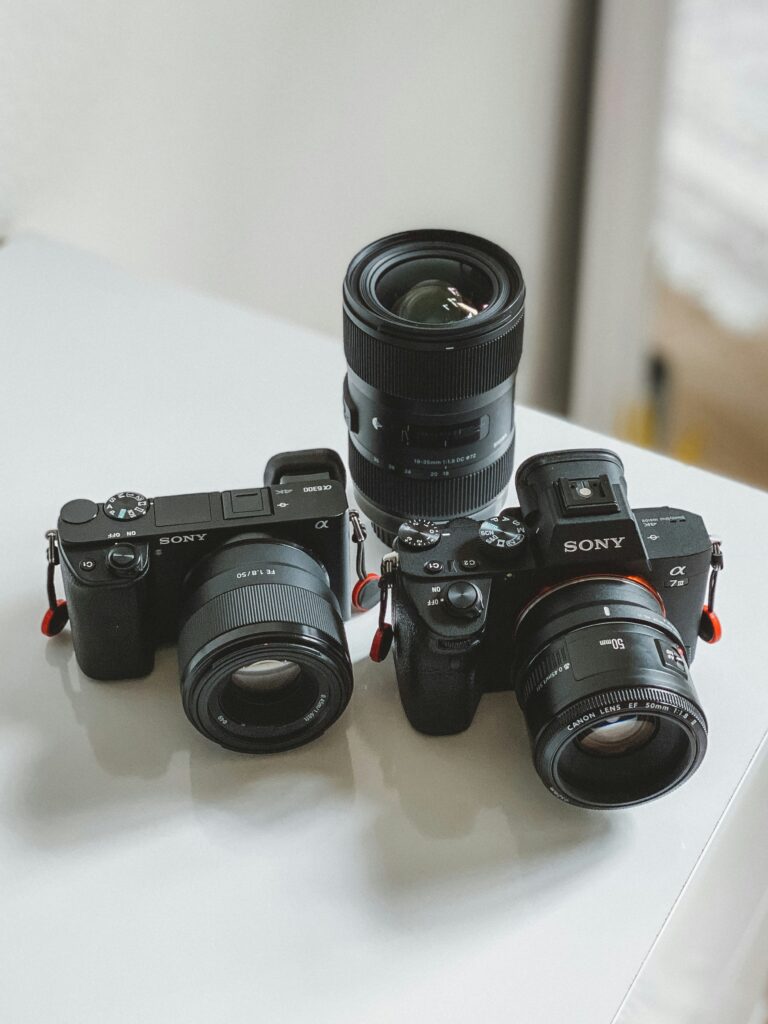
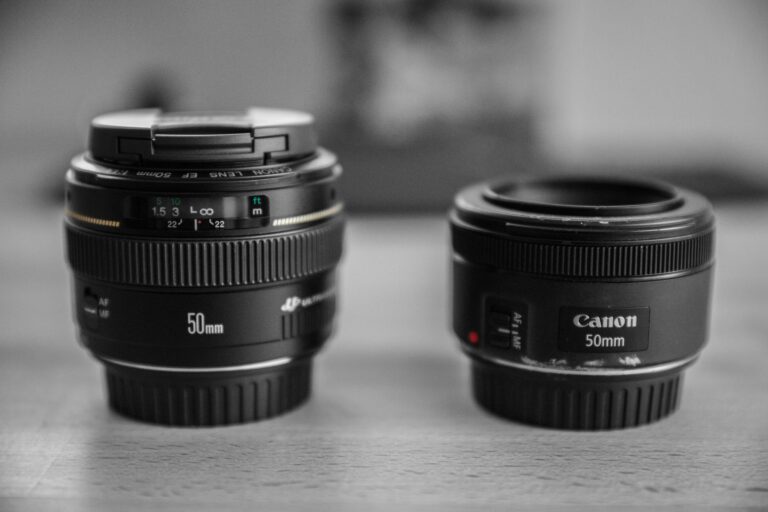
Canon’s L-series lenses — identified by the red ring on the barrel — represent their professional tier: best optical quality, weather sealing, fluorite and UD elements, superior coatings. Used L-series lenses hold their value well precisely because the quality is recognised and demand is consistent. Canon’s non-L lenses range from excellent to adequate depending on the specific model.
Nikon’s Gold Ring (formerly marked with a gold band) and current S-Line lenses for the Z mirrorless system represent their top tier. The legacy Nikkor lineup for F-mount contains many outstanding lenses across price points, including some of the most optically capable affordable primes ever made.
Sony’s G Master lenses represent their premium tier for the E-mount system. Tamron, Sigma, and Tokina — the major third-party manufacturers — all produce lenses across the quality spectrum, and Sigma’s Art series in particular has earned a strong reputation for optical quality that competes with and sometimes exceeds first-party equivalents at competitive prices. Quality used Sigma Art lenses are among the better value propositions on the used market.
Zeiss, Leica, and Voigtländer produce manual-focus and some autofocus lenses at the premium end of the optical quality spectrum. These are expensive new and retain value used, but the optical quality and build quality are genuinely exceptional. For portrait and studio photographers who work at a deliberate pace, used Zeiss and Leica glass delivers image quality that few autofocus lenses match.
What This Means for Your Purchase Decision
Coating quality and used lens glass quality are not things you can assess from a product listing photograph. They require either direct inspection, a detailed and honest condition description from a knowledgeable seller, or confidence in the grading standards of the source you are buying from.
This is where the source matters as much as the specification. A reputable used equipment dealer who tests every lens optically — checking for decentering, coating damage, internal issues — and grades conservatively provides something that a private seller on a classified platform cannot always offer: accountability. When a professional dealer grades a lens as Excellent, they are staking their reputation and return policy on that assessment. When a private seller describes a lens as mint, they are offering an opinion.
For the photographer building a serious kit from used glass, the combination of knowledge and trusted sourcing is what transforms the used market from a gamble into a strategy. Know what the numbers on the barrel mean. Know what the coatings should look like. Know which lens lines represent genuine optical quality. Browse our current used lens inventory — every listing includes an honest coating and glass condition assessment — and buy from sources who know the same things you do.
For a deeper technical look at how coatings reduce reflection, Canon’s own optics research breaks down the interference principle in more detail than we’ve covered here.
— — —
Next: Common Lens Mistakes Beginners Make — and How to Avoid Them
One Comment