Lens Types and Purposes.
A Plain-English Guide to Lens Types and When to Use Them
Prime vs Zoom, Wide vs Telephoto, and Macro: A Plain-English Guide to Lens Types and When to Use Them
There is a story that gets told at photography workshops with some regularity, usually by an instructor who has watched a student arrive carrying a bag full of lenses for the wrong occasion. The student shows up to photograph a primary school nativity play equipped with a 500mm super-telephoto — a lens designed to photograph eagles from three hundred metres — and spends the entire performance unable to fit a single child in the frame without backing into the rear wall of the auditorium. Meanwhile the parent next to him, armed with nothing more than a modest 50mm prime, goes home with photographs the school will print and frame.
The lens was not the problem. Using the wrong lens for the situation was the problem.
Understanding lens types and purposes — what each is designed to do, why it exists, and which photographic situations demand it — is the foundation of making good purchasing decisions and, more immediately, good photographs. This post is that foundation.
The First Division: Prime Lenses vs Zoom Lenses
The single most fundamental distinction in the lens world is between prime lenses and zoom lenses. Every other classification sits inside this one.
A prime lens has a fixed focal length. It cannot zoom. If you want to frame your subject differently, you move your feet. A 50mm prime is always 50mm. A 35mm prime is always 35mm. That is all it does, and it does it extremely well.
A zoom lens covers a range of focal lengths. A 24-70mm zoom can be set to any focal length between 24mm and 70mm. A 70-200mm zoom covers that entire range with a twist of the barrel. The convenience is obvious and real.
So why would anyone choose a prime? The answer lies in what a fixed focal length allows the lens designer to do.
When an optical engineer designs a prime lens, every element of that lens — every piece of glass, every coating, every mechanical tolerance — is optimised for a single focal length. There are no compromises required to make the lens perform across a range. The result, as a general principle, is that prime lenses deliver superior optical quality compared to zoom lenses at equivalent price points. Sharper images. Better contrast. Less distortion. More effective correction of chromatic aberration. And because they do not need the complex mechanical zoom mechanism, they can be designed with larger maximum apertures — f/1.4, f/1.8, f/2 — at costs that would be prohibitive in a zoom.
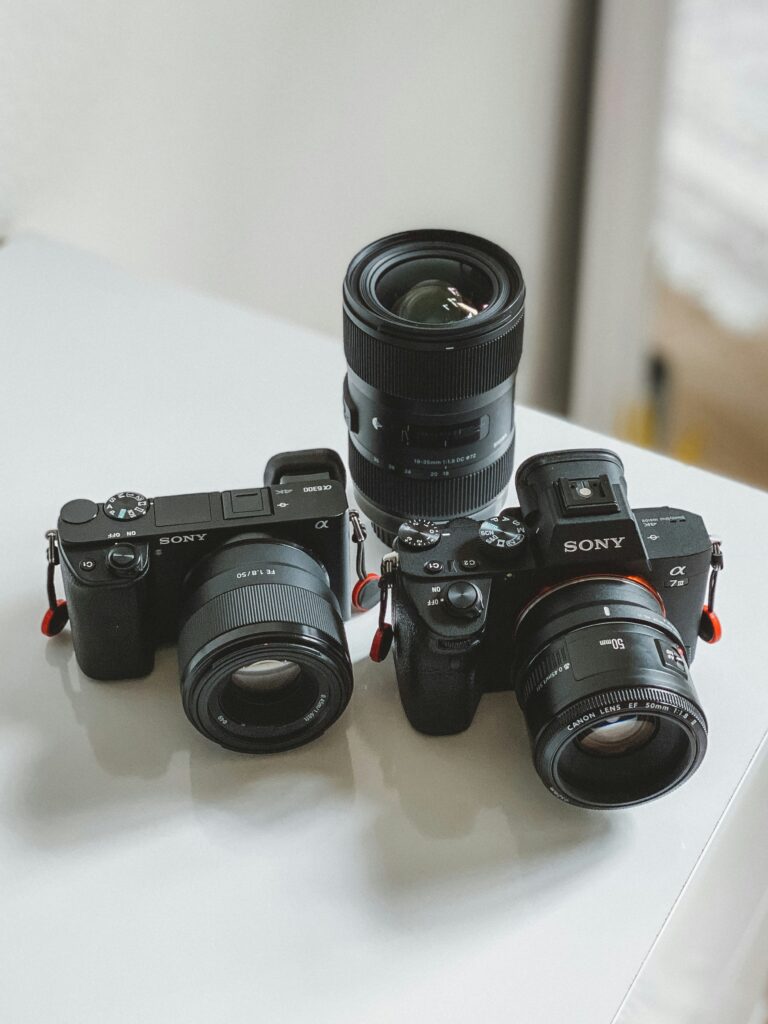
That last point matters enormously for low-light photography and background separation. A 50mm f/1.8 prime costs a fraction of what a zoom lens with equivalent aperture would cost, and it will outperform the zoom optically at that aperture. For portrait photographers, event photographers, and anyone who regularly works in variable or difficult light, primes are not a nostalgic affectation — they are the practical choice.
Zoom lenses earn their place through versatility. A single 24-70mm f/2.8 zoom covers wide-angle, standard, and short telephoto in one barrel, which is why it is the most common professional event and wedding lens in existence. You are not stopping to change lenses when something is happening. You are adjusting and shooting. For travel photography, where carrying multiple lenses is impractical, a well-chosen zoom can cover almost everything you need. The compromise in maximum aperture and peak optical quality is, in many situations, a worthwhile trade for the flexibility.
The experienced photographer’s answer to prime versus zoom is usually: both, chosen deliberately for the situation. The beginner’s answer should probably start with one excellent prime to learn on, then expand from there.
Wide-Angle Lenses: When the Scene Is the Subject
Wide-angle lenses — broadly, anything below 35mm on a full-frame camera — exist to capture more of the world in a single frame than the human eye comfortably takes in at once. They are the lenses of landscape, architecture, interiors, astrophotography, environmental portraiture, and photojournalism where context is as important as subject.
The defining characteristic of a wide-angle lens, beyond its broad field of view, is its relationship with depth. Wide lenses exaggerate the sense of distance between near and far elements in a scene. A foreground rock in a landscape appears large and close; the mountains behind it appear distant and vast. This spatial expansion is a creative tool that wide-angle photographers use deliberately to create images with drama and scale that telephoto images cannot achieve.
A word of caution that saves embarrassment: wide-angle lenses are not flattering for close-up portraiture. The distortion that makes landscapes feel expansive makes faces feel wrong — noses appear larger, chins protrude, ears recede. Environmental portraits, where the subject is photographed at a natural conversational distance within their surroundings, can work beautifully with a 24mm or 28mm lens. Tight headshots should not be attempted below about 50mm.
Ultra-wide lenses — 16mm and below — require considerable compositional skill to use well. The barrel distortion becomes significant, the perspective becomes dramatic to the point of unreality, and images taken without care look like snapshots from a funhouse mirror. In the right hands, an ultra-wide lens produces images that stop people in their tracks. In the wrong hands it produces images that look like mistakes.
For most photographers, a 24mm or 28mm prime, or a wide zoom in the 16-35mm range, covers landscape and architectural needs comprehensively. These are among the most rewarding lenses to shoot with once you understand how to compose for their perspective.
Standard Lenses: The 50mm and Why Every Photographer Should Own One
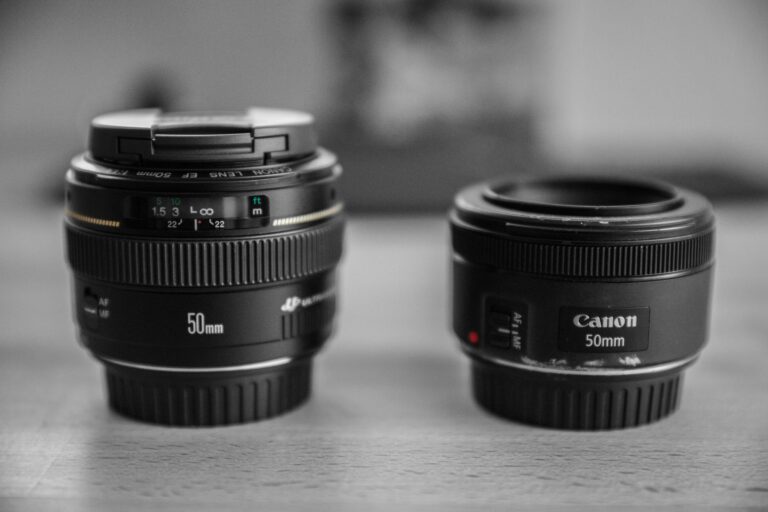
The 50mm lens — or its crop-sensor equivalent, approximately 35mm on APS-C — occupies a unique position among camera lens types and purposes. It is the lens that most closely replicates the angle of view of the human eye, producing images that feel natural and unmanipulated. Subjects appear at a real-world size. Spatial relationships between foreground and background feel true. Nothing is exaggerated or compressed.
This naturalness makes the 50mm deceptively demanding. You cannot rely on dramatic wide-angle perspective or telephoto compression to make an image interesting. The image has to be interesting on its own terms — good light, strong composition, genuine moment. Many professional photographers consider the 50mm the best lens to learn on for exactly this reason.
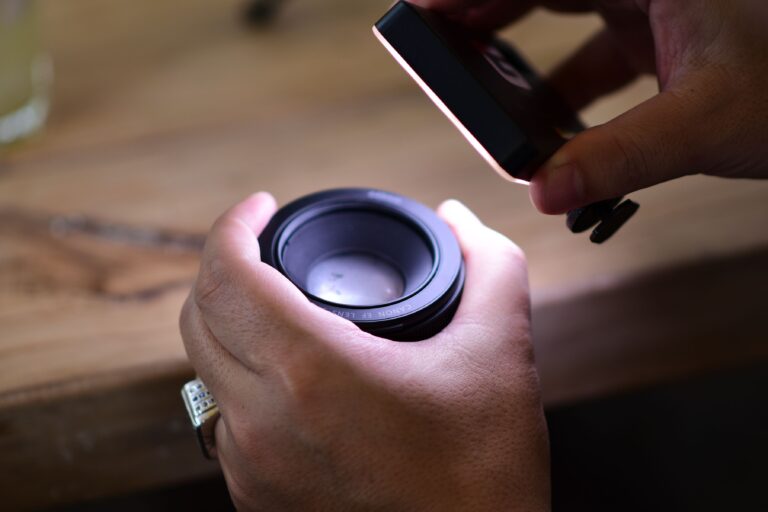
It also happens to be, almost universally, the cheapest way to access a large maximum aperture. The 50mm f/1.8 from every major manufacturer is one of the best value propositions in photography: compact, lightweight, optically excellent, and available with an aperture large enough to shoot in near-darkness or to render backgrounds into smooth, creamy blur. If you own one lens, this is a strong candidate for that lens. Browse our current selection of used 50mm primes to see what’s available right now.
Telephoto Lenses: Reach, Compression, and the Art of the Long Game
Telephoto lenses — 85mm and above, with the super-telephoto range beginning around 300mm — exist to close the distance between photographer and subject without the photographer moving. This is their obvious function. Their less obvious functions are equally important.
Portrait photographers favour the 85-135mm range not primarily because they want distance from their subjects, but because of the flattering compression these focal lengths produce on facial features. At 85mm, faces look natural and proportioned. The background compresses slightly, separating the subject from their environment in a way that feels polished and intentional. The 85mm f/1.8 is one of the most beloved portrait lenses in the industry for this reason, and quality used examples represent outstanding value.
Sports and wildlife photographers work at the longer end — 200mm, 300mm, 400mm, 500mm, 600mm — because their subjects are genuinely far away and will not cooperate with requests to come closer. A bird in flight, a footballer at the far end of the pitch, a predator on the African plains — these subjects require reach that shorter lenses simply cannot provide. Super-telephoto lenses are large, heavy, and expensive, but for their intended purpose there is no substitute.
The compression effect of long telephoto lenses is also used creatively in street and documentary photography. A 200mm lens shot down a busy street compresses the crowd into a dense, layered composition that makes the street feel more crowded and energetic than it appears to the naked eye. Urban photographers use this compression to comment on density, anonymity, and the texture of city life in ways that a wide-angle lens looking at the same scene could never achieve.
One practical note: longer telephoto lenses amplify camera movement. A slight hand tremor that is invisible at 50mm becomes a blurred image at 400mm. Image stabilisation — built into many modern lenses and camera bodies — helps significantly, but longer lenses also generally demand faster shutter speeds to freeze both subject motion and camera motion. This is worth factoring into your expectations when purchasing a telephoto for the first time.
Macro Lenses: The World at Close Range
A macro lens is designed to focus at very close distances, allowing the photographer to capture subjects at life size or greater on the sensor. The standard definition of true macro is a 1:1 reproduction ratio — a subject 36mm wide fills the full width of a full-frame sensor frame. At this scale, a common housefly becomes a landscape. A coin becomes a topographical map. A flower petal reveals an architecture of texture and colour invisible to casual observation.
Macro lenses are the tools of nature photographers documenting insects and botanical details, product photographers shooting jewellery and small objects, food photographers capturing the texture of ingredients, and forensic photographers documenting evidence. They are specialist lenses with a defined purpose, and within that purpose they are irreplaceable.
What is often overlooked is that macro lenses — typically available in 60mm, 90mm, 100mm, and 180mm focal lengths — are also excellent general-purpose lenses. A 100mm macro is optically superb, covers the portrait focal length range with flattering compression, and focuses from macro distances all the way to infinity. Many photographers who buy a macro lens for close-up work discover it becomes one of their most-used lenses for a much wider range of subjects.
Specialist Lenses Worth Knowing About
Beyond the main categories, several specialist lens types serve specific photographic problems worth a brief mention.
Tilt-shift lenses allow the optical axis of the lens to be moved independently of the camera body. Architectural photographers use them to correct the converging vertical lines that occur when a camera is tilted upward to capture a tall building — an effect called keystoning that makes buildings appear to lean backward. Fine art photographers and commercial shooters use tilt-shift lenses to achieve a selective focus effect that mimics the look of large-format photography. These are expensive, manual-focus instruments for specific professional applications.
Fisheye lenses are ultra-wide lenses — typically 8-15mm — that intentionally embrace extreme barrel distortion, producing a circular or near-circular image with a 180-degree or greater field of view. They are used in action sports photography, skateboarding and surfing imagery, and creative photography where the distorted perspective is the point rather than a flaw to be corrected.
Lensbaby lenses are a modern category of creative optics that produce selective, swirling, or otherwise unconventional focus effects. They are not precision instruments; they are creative tools for photographers who want a distinctive, handmade aesthetic in their images.
The Purchasing Conclusion: Match the Lens to the Job
Every entry in this guide to lens types and purposes exists because a specific photographic problem demanded a specific optical solution. The wide-angle lens exists because landscape photographers needed to capture scale. The telephoto exists because wildlife photographers needed reach. The macro exists because scientists and naturalists needed magnification. The fast prime exists because available-light photographers needed to work without flash.
When you are choosing a lens — whether new or used — the first question is never “what is the best lens” in the abstract. It is “what am I photographing, and what optical properties does that subject demand?” The answer to that question points directly to the lens type you need. Everything else — brand, maximum aperture, price point, new versus used — is a secondary decision made within the category the subject has already defined. Photography Life’s lens buying guide covers the new-vs-used decision from a similar angle if you want a second perspective.
If you are building a kit from scratch or adding to one you already have, the next post in this series will walk you through exactly how to sequence those purchases — what to buy first, what to add second, and how to avoid the common trap of accumulating lenses without a coherent strategy.
— — —
Next: Building Your First Lens Kit — How to Start Smart and Buy with Purpose
2 Comments