Used Lens Buying Checklist — 8 Things to Inspect Before You Buy: What to Inspect, What to Avoid, and How to Buy With Confidence
What to Inspect, What to Avoid, and How to Buy With Confidence
This is the post the entire series has been building toward.
Over the previous nine posts, we have covered why the lens is the foundation of a camera kit, what focal length and aperture mean in practice, which lens types serve which photography, how to build a kit with purpose rather than accumulating gear at random, why used lenses represent outstanding value when purchased correctly, what coating quality and glass quality look like, the mistakes that cost beginners money and photographs, and how to maintain lenses through a long working life.
All of that knowledge converges here, in the practical moment of deciding whether a specific used lens is worth buying at a specific price. This post gives you the Used Lens Buying Checklist — the sequence of questions and inspections that separates a confident, informed purchase from a gamble.
Work through this checklist in order. Each section builds on the previous one. By the time you reach the end, you will have either confirmed that the lens is a sound purchase or identified the reason it is not.
Step One of The Used Lens Buying Checklist:
Define What You Need Before You Look at Anything
The first items on the checklist happen before you look at a single listing.
What is my primary photographic subject?
What focal length range does that subject require?
What minimum aperture do I need for the conditions I shoot in?
What is my camera’s sensor size and crop factor, and how does that affect the focal length I need?
What is my realistic budget, and am I prepared to buy used to maximise optical quality within it?
If you cannot answer these questions specifically, return to the earlier posts in this series before proceeding. A purchase made without clear answers to these questions is a purchase made without a strategy, and without a strategy the checklist that follows has nothing to check against.
Step Two: Evaluate the Source
Before evaluating the lens itself, evaluate where you are buying it from. This step filters out a significant proportion of potential problems before they arise.
Is this a reputable dealer with a track record in used photographic equipment?
Do they test and grade their lenses to a documented standard?
Do they offer a return period if the lens does not perform as described?
Are their condition descriptions detailed and specific, or vague and generic?
Do they disclose issues — fungus, dust, cleaning marks, aperture blade oil — explicitly in the listing?
A dealer who discloses issues honestly is more trustworthy than one whose listings are uniformly positive. Real used equipment has real histories, and a dealer who acknowledges that is a dealer whose grading you can rely on. A listing that describes every lens as mint or like new regardless of age or visible wear is a listing that should be read with scepticism.
Private sales from classified platforms can offer good value but require more due diligence. The seller may be entirely honest but lack the optical knowledge to identify issues that a professional tester would catch. Factor this into your assessment of price and risk.
Step Three: Check the Condition Rating Against the Description
Once you have identified a source you are willing to trust, read the condition rating and the full description carefully and check them against each other.
Does the written description match the condition rating?
Are any issues — dust, marks, cleaning wear — mentioned specifically and located precisely?
Does the description mention whether the lens has been tested optically?
Are the aperture blades described as clean and functioning correctly?
Is the autofocus described as functioning correctly on a compatible body?
Is the mount in good condition with no damage to the electrical contacts?
A condition rating of Excellent with a description that mentions significant cleaning marks, loose focus ring, and minor fungus is not an Excellent lens — it is a lens that has been over-graded. Trust the description over the rating when they conflict, and price your offer accordingly.
Step Four: Research the Specific Lens Model
Before committing to a purchase, spend fifteen minutes researching the specific lens model you are considering. This step routinely saves buyers from purchasing lenses with known issues that a brief search would have revealed.
Is this lens model known for any common faults or failure modes?
Are there known autofocus compatibility issues with your specific camera body?
What is the typical market price for this lens in this condition?
Is the asking price reasonable relative to the current used market?
Are there known optical weaknesses — focus breathing, heavy distortion, poor corner sharpness — that would affect your specific use case?
If this is an older lens, is it compatible with your camera mount natively or via adapter?
Photography forums, user reviews, and dedicated lens review sites contain a remarkable depth of real-world experience with specific lens models. A lens that has a reputation for decentering issues, or for front element coatings that degrade with age, or for autofocus motors that fail at high mileage — this information exists publicly and is worth knowing before you buy rather than after.
Step Five: Your Used Lens Buying Checklist — What to Look For
If you are buying in person, or if the dealer provides detailed photographs, work through this physical inspection sequence.
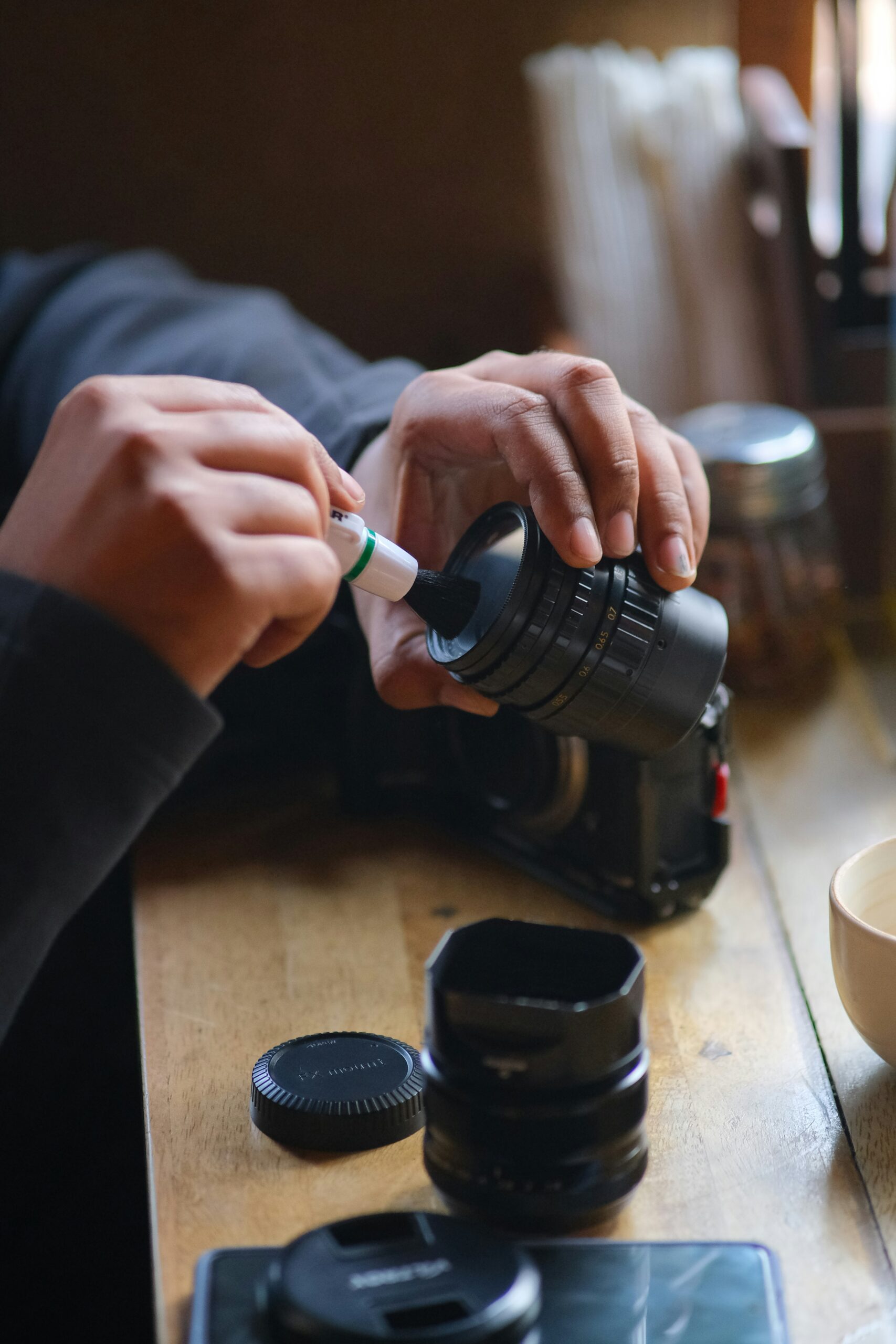
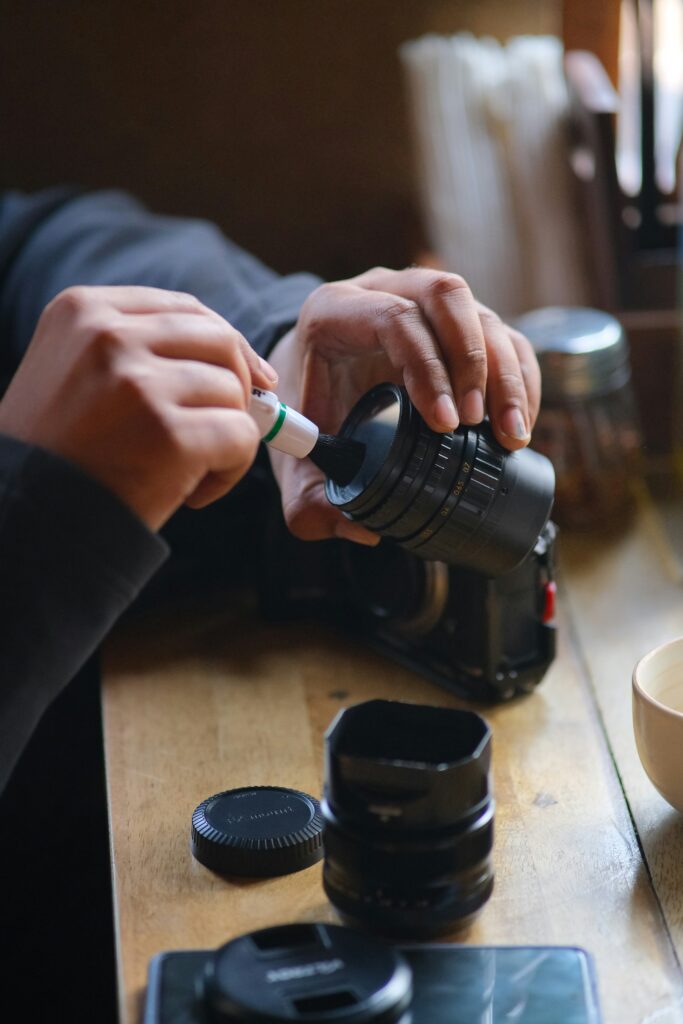
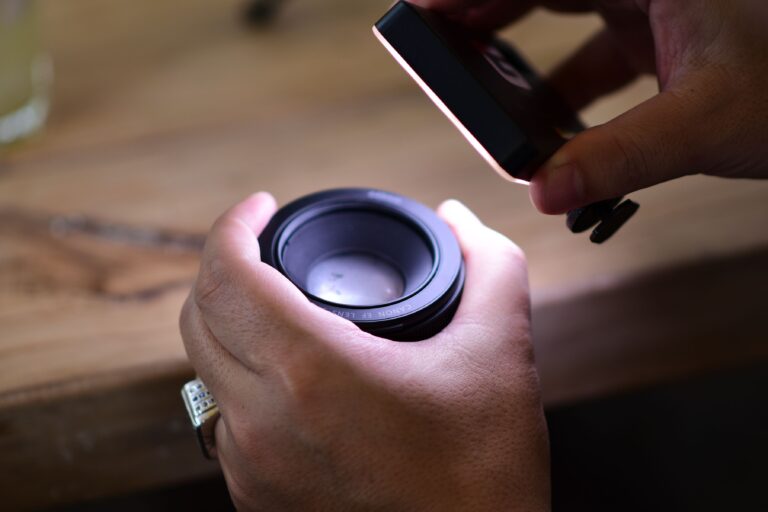
Front element: Hold the lens at an angle to a light source and examine the front element surface. You are looking for the coloured reflection of a healthy coating — purples, greens, ambers. You are checking for cleaning marks (fine swirl patterns visible under oblique light), scratches, chips, or coating damage. Minor cleaning marks in a small area are not a deal-breaker at an appropriate price. Extensive swirl marks covering the majority of the element are a concern. Any chips or deep scratches are serious.
Rear element: Inspect the rear element with the same care as the front. Use a light source and look at the surface under oblique illumination. The rear element is optically more sensitive than the front for most lens designs, and any coating damage or deposits here deserve careful attention.
Internal elements: Hold the lens up to a bright light source — a window or lamp — and look through it. You are checking for fungus (web-like or branching patterns on element surfaces), significant dust accumulation, or haze. Minor dust is normal and inconsequential. Fungus at any stage should be disclosed in the listing and priced accordingly. Internal haze may indicate coating deterioration or residue from fungus treatment.
Aperture blades: With the lens detached from a body, use the aperture ring (on older lenses) or manually actuate the aperture (where possible) to check that the blades open and close smoothly and evenly. Look for oil on the blades — a slight sheen indicates contamination. Check that the blades form a reasonably round opening at intermediate apertures.
Focus and zoom rings: Turn the focus ring through its full range. It should move smoothly without tight spots, grinding, or excessive looseness. On zoom lenses, extend and retract the zoom through its full range. It should be firm and consistent without stiffness, slipping, or creaking.
Lens mount: Examine the mount for damage, wear, or bent contact pins. The mount should attach and detach from a camera body smoothly with a clean, positive lock. Excessive play between lens and body when mounted suggests wear in the mount mechanism.
Barrel condition: Cosmetic wear on the barrel — light marks, worn lettering, minor dents — does not affect optical performance. Significant impact damage, bent filter threads, or cracked barrel sections may indicate that the lens has been dropped, which could have caused internal misalignment even if the lens appears to function correctly.
Step Six: Optical Testing — The Photographs Tell the Truth
Physical inspection tells you about condition. Optical testing tells you about performance. Whenever possible, test the lens on your own camera body before completing a purchase, or verify that the dealer has conducted optical testing and will stand behind the results.
Mount the lens on your camera body and confirm that autofocus engages and functions correctly.
Photograph a flat, detailed subject — a bookshelf, a brick wall, a printed test chart — at a range of apertures from maximum to f/8.
Examine the images at 100 percent on a screen and check sharpness across the frame — centre and all four corners.
Check that sharpness is symmetrical — if one corner or side is consistently softer than the opposite side, the lens may be decentered.
Shoot a high-contrast subject — dark objects against a bright sky — and check for chromatic aberration (coloured fringing on edges).
Shoot toward a bright light source and assess flare resistance and contrast in backlit conditions.
Confirm that image stabilisation (if present) engages and functions correctly.
A lens that passes the physical inspection and produces sharp, consistent, well-corrected images in optical testing is a lens worth buying at the right price. A lens that shows decentering, unexpected softness, or significant optical faults in testing is a lens to decline regardless of how clean it looks physically.
Step Seven: Price Assessment
The final step before purchase is confirming that the price is fair relative to the current used market for this specific lens in this specific condition.
What are comparable examples of this lens selling for at reputable dealers?
What are private sale prices for this lens in comparable condition?
Does the asking price reflect any disclosed issues appropriately?
Is the price low enough to suggest undisclosed problems, or high enough to suggest the seller’s assessment of condition exceeds the evidence?
A price significantly below market for a lens in stated excellent condition is worth scrutinising carefully — either the condition is not as described, or there is an issue the seller has not identified. A price at or above market is only justified if the condition and testing genuinely support it.
For significant purchases, knowing the market price of the lens new as well as used gives you context for the depreciation curve. A lens that retains eighty percent of its new value used is a lens the market considers consistently excellent — demand is strong and supply is limited. A lens that sells for twenty percent of its new price used may have been superseded by a better option, or may have a reputation that the market has priced in.
Some conditions are clear signals to decline a purchase regardless of price.
Active fungus that has progressed beyond the earliest stage — visible web patterns covering significant areas of an element, or any sign of etching on the glass surface. The optical damage may be irreversible and the cleaning cost may exceed the lens value.
Decentering confirmed in optical testing — asymmetric sharpness that persists across apertures and cannot be explained by focusing error. Realignment is a specialist job with variable results and uncertain cost.
Impact damage with visible structural consequences — bent filter threads, cracked barrel, mount that does not attach cleanly. The internal consequences of a significant drop are not always visible externally but are often present.
A seller who is unwilling to allow inspection or testing, provides only distant or low-quality photographs, or cannot answer specific questions about condition and history. Legitimate sellers of legitimate equipment do not have reasons to obstruct reasonable due diligence.
A price so low that it implies the seller knows something the listing does not disclose. Exceptional bargains in the used lens market do occasionally exist, but they are rare enough that an apparently exceptional price deserves exceptional scrutiny.
Step Eight: Buying With Confidence: The Summary
The used lens market, approached with knowledge and applied to the right sources, is one of the best opportunities in photography to access genuine optical quality at a price that makes a serious kit achievable on a realistic budget. The glass does not know it is used. The photographs do not look secondhand. The image quality of a well-maintained used lens from a reputable manufacturer is the same as the day it was made.
What separates a confident used lens purchase from a gamble is exactly what this checklist provides: a clear understanding of what you need before you look, an honest assessment of where you are buying from, a thorough physical and optical inspection, and a realistic price comparison against the current market. Work through these steps, and the risk that remains is manageable. Skip them, and the risk is self-inflicted.
You now have the complete framework — from understanding why the lens matters more than the body, through the optical principles that govern what lenses do, to the practical knowledge of how to choose, evaluate, purchase, and maintain the glass that will define the photographs you make. The rest is getting out and shooting.
— — —
Browse our current inventory of tested, graded used lenses — every one inspected against the standards described in this series.
One Comment